
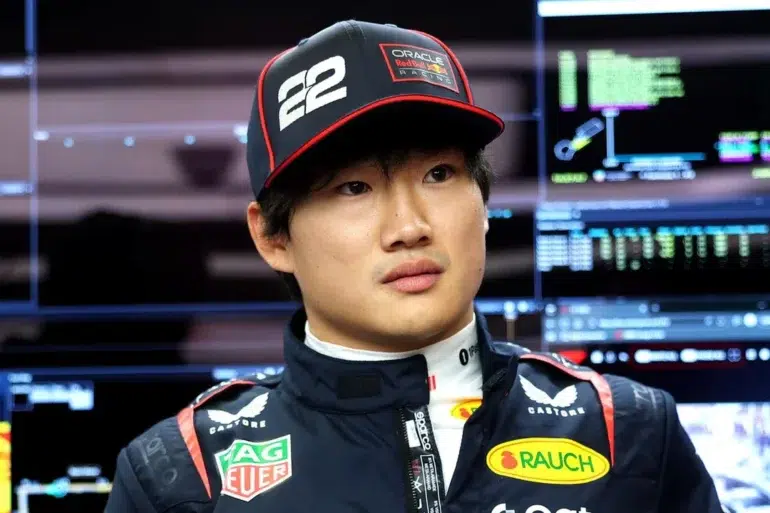

The world of Formula 1 is a realm where seconds can define a champion, and luck can turn the tide of fate. For Yuki Tsunoda, the recent Las Vegas Grand Prix proved to be another chapter in a season filled with adversity.As the race unfolded, the Japanese driver faced challenges that seemed insurmountable, leaving fans to wonder if fortune would ever smile upon him.
In a season marred by hardships, Tsunoda’s struggles at the Las Vegas Grand Prix were no exception. After qualifying in a disappointing 19th position due to a mistake with tire pressures, he was thrust into a precarious situation. The team made the decision to breach parc ferme regulations, adjusting his set-up and providing him with a new power unit for the race start. This would prove to be a move fraught with complications from the get-go. Starting from the pit lane, he had to make an immediate pit stop, switching from the medium to the hard compound. Unfortunately, the timing left him vulnerable as a virtual safety car neutralized the race almost instantaneously, allowing his competitors to gain a significant advantage.
Tsunoda, who ended the race in a lowly 14th position (later promoted to 12th after disqualifications), expressed his frustration regarding the strategic decisions and unintended circumstances that overshadowed his performance.
What went wrong at the Las Vegas Grand Prix for Tsunoda?
The Las Vegas Grand Prix was a significant point in the season, not just for Tsunoda but for all drivers. However, it marked another chapter in the story of a season filled with missteps and missed opportunities for him. Tsunoda qualified 19th after his team mismanaged his tyre pressures, leading to a series of setup changes on race day that were meant to rectify the issue.
The race began with Tsunoda pitting on the very first lap to switch from medium to hard compound tyres. Unfortunately, this decision coincided with the deployment of a virtual safety car, which allowed several rival drivers to capitalize on the situation. Tsunoda’s unique two-stop strategy did not play out in his favor, placing him in a disappointing 14th position—only rising to 12th after two McLaren drivers were disqualified.
Reflecting on this misadventure, Tsunoda stated, “The safety car came in right after I pitted… so there were no points.” This situation illuminates the thin margins that define success in Formula 1, where one bad decision or unfortunate timing can lead to disappointing results.
Moreover, this race added to Tsunoda’s ongoing struggles in the driver standings, where he currently finds himself in 17th place. In stark contrast, his teammate Max Verstappen has been solidifying his position at the top with consistent victories. The differences in performance between these two drivers fuel speculation about how Tsunoda can harness his potential moving forward.

How can Tsunoda overcome these challenges?
In moments of adversity, the question arises: how can Yuki Tsunoda turn around his fortunes? The key lies in both mental resilience and strategic adjustments. Although he expressed frustration over the state of his current performances, Tsunoda also focused on the necessity of learning and evolving. “At least we changed the engine; something to look forward to for the next grands prix,” he remarked, illustrating a sense of optimism amid a challenging time.
One of the most effective ways for Tsunoda to regain traction is through consistent and effective communication with his team. Enhanced collaboration with engineers and team strategists can lead to better race setups, ensuring critical errors like those seen in Las Vegas don’t occur again. Understanding the intricacies of his Red Bull RB21 will play a vital role in his performance moving forward.
Moreover, sharpening his skills during practice sessions will also be essential. As Tsunoda mentioned, the need to qualify properly cannot be overstated. By gaining confidence through improved qualifying results, he may find that his race pace and consistency improve significantly.
One may also consider emotional fortitude; remaining focused and maintaining a positive mindset can sometimes be just as crucial as physical performance. Mental preparation plays an integral role in how drivers approach their outings, particularly when facing such daunting circumstances.
What does the future hold for Yuki Tsunoda?
Looking ahead, there is still a multitude of races left in the season and changes that could positively impact Tsunoda’s performances. While he fights to improve his standings, the 2025 F1 season has been a repeated topic of discussion among fans and experts alike. The upcoming battles and challenges can pave the way for personal growth for Tsunoda, particularly if he can adapt to the changing landscape of the sport.
One potential avenue for Tsunoda is to leverage the innovations and changes being introduced within F1 race strategies, such as modified regulations and new car dynamics. As teams evolve and adapt strategies, understanding their implications on races will be crucial for any driver looking to navigate the complexities of modern Formula 1 racing.
Engaging with resources like various podcasts and analytical platforms available can further provide insights into competitive maneuvers within the sport. Listening to interviews and discussions related to team dynamics, such as those presented by individuals like Liam Lawson, can spark new ideas for approaching both races and strategies, ultimately benefiting Tsunoda.
As he continues to grapple with the challenges of his situation, the realization that improvement is both possible and persistent can keep him motivated. Success in Formula 1 isn’t merely about one race; it requires learning and adapting with each track, tire, and turn.
With key changes under the hood and a budding resolve to break free from the struggles he’s faced, the future holds potential shifts for Yuki Tsunoda. With unwavering determination, the lessons learned may become the cornerstone of his comeback as he navigates the thrilling world of motorsports.


