
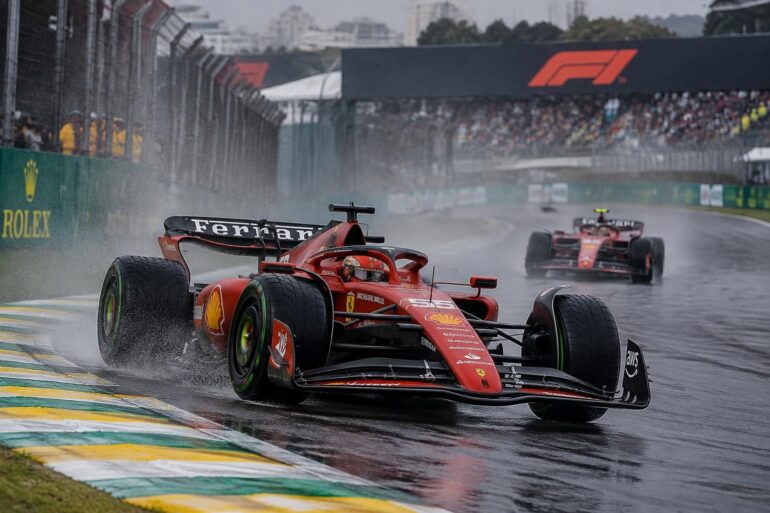

Ferrari’s São Paulo collapse shows you how one setup choice narrowed its race options. Interlagos exposed the price of a painful compromise across pace, balance, and tire life. The gap from Mexico left Ferrari without its earlier edge.
The São Paulo Grand Prix exposed how Ferrari’s engine limits shaped its car setup at Interlagos. A week after stronger form in Mexico City, the Scuderia faced a circuit that punished its aerodynamic compromise and limited tire performance. The cost of Ferrari’s narrow operating window became clear as rain, cold conditions, and low grip added fresh pressure. Formula 1 fans saw a race collapse rooted in several connected weaknesses, not one isolated error.
Ferrari’s São Paulo GP setup compromise
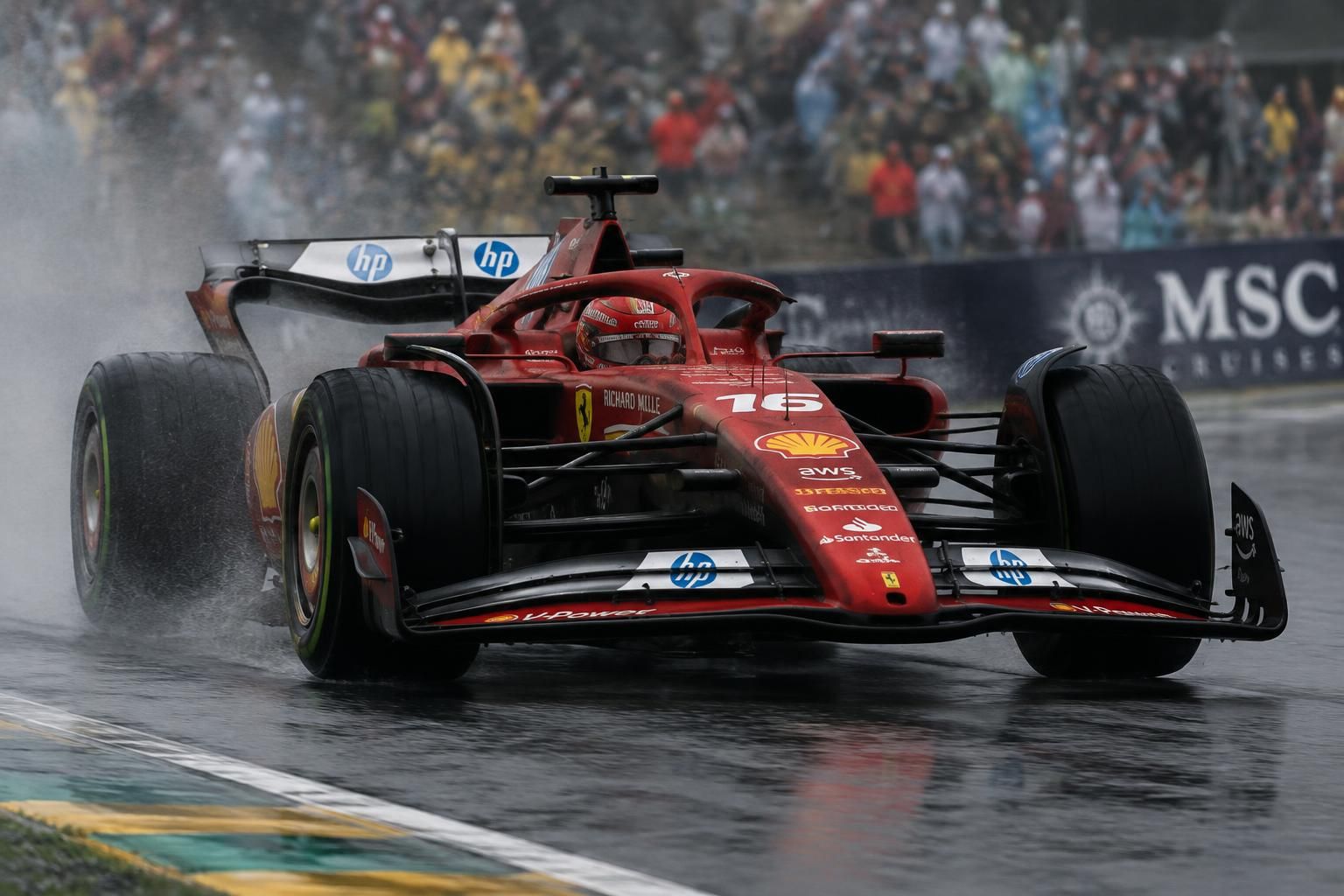
Ferrari’s pace fell sharply from Mexico, where the SF-26 had looked more competitive. At Interlagos, the layout exposed a mismatch between straight-line speed and corner demand. The tight middle sector required grip, while the fast final sector rewarded low drag. That conflict defined a difficult aerodynamic balance from the opening practice session.
Ferrari chose low downforce to limit drag from its engine deficit. That choice left the front axle short of grip through the middle sector. The rear also reacted sharply, so drivers had little room to trust the car. Read our SF-26 chassis and engine report for the cost of that strategic trade-off.

Ferrari’s tire degradation at Interlagos
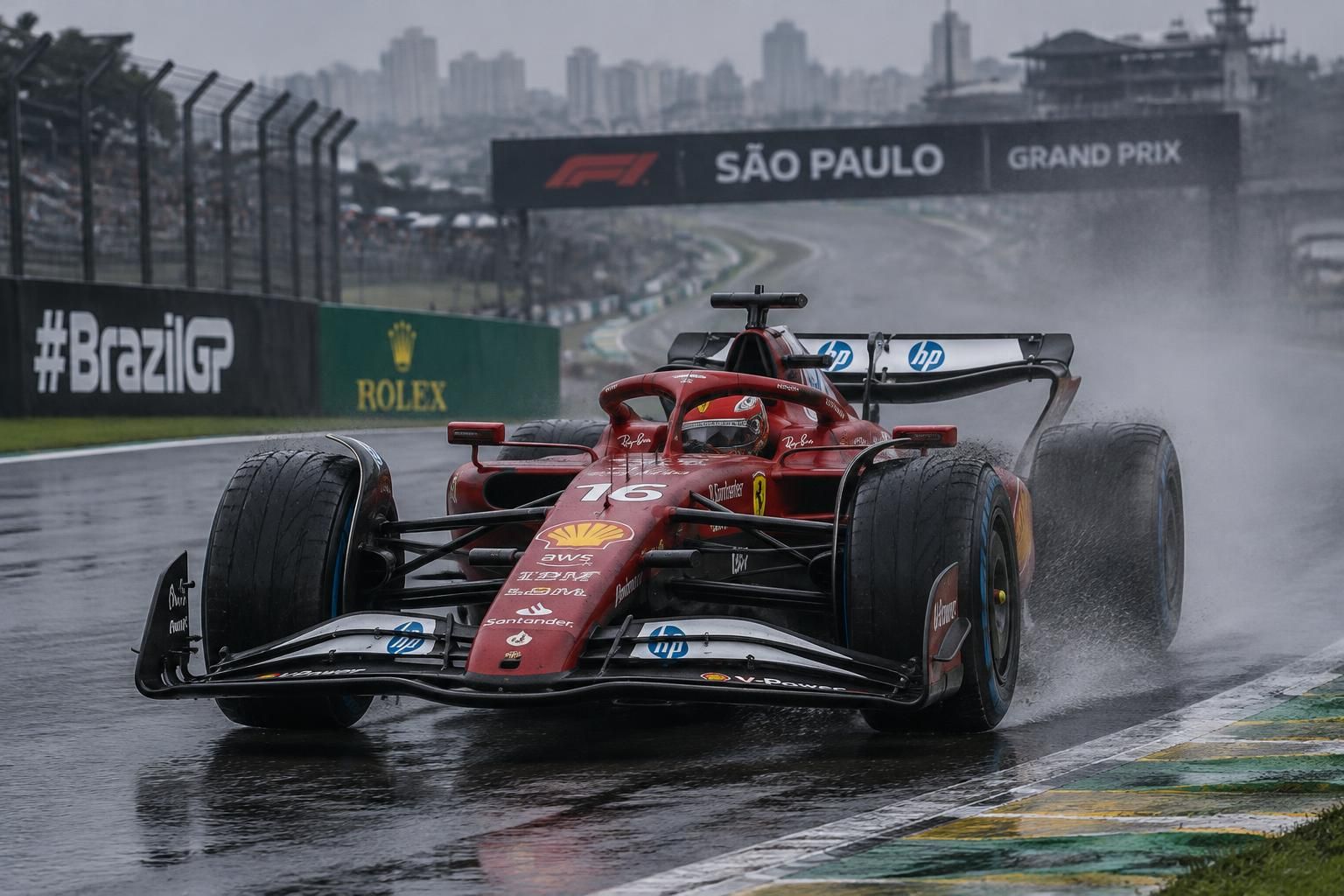
Rain cut grip enough to require intermediate tyres at Interlagos. Low temperatures created the sharper problem by narrowing the tyres’ usable range. Ferrari could not balance warm-up, grip, and durability across each stint. Track conditions magnified the SF-26’s narrow performance window, as Interlagos demands.
Ferrari used higher-than-ideal pressure for its first race tyre set. The team sought faster heat build-up, but the call reduced the contact patch. Less rubber met the road, and tread heat rose as tire degradation accelerated. See our Interlagos tyre analysis for why that pressure choice backfired quickly.

What Ferrari’s painful compromise means
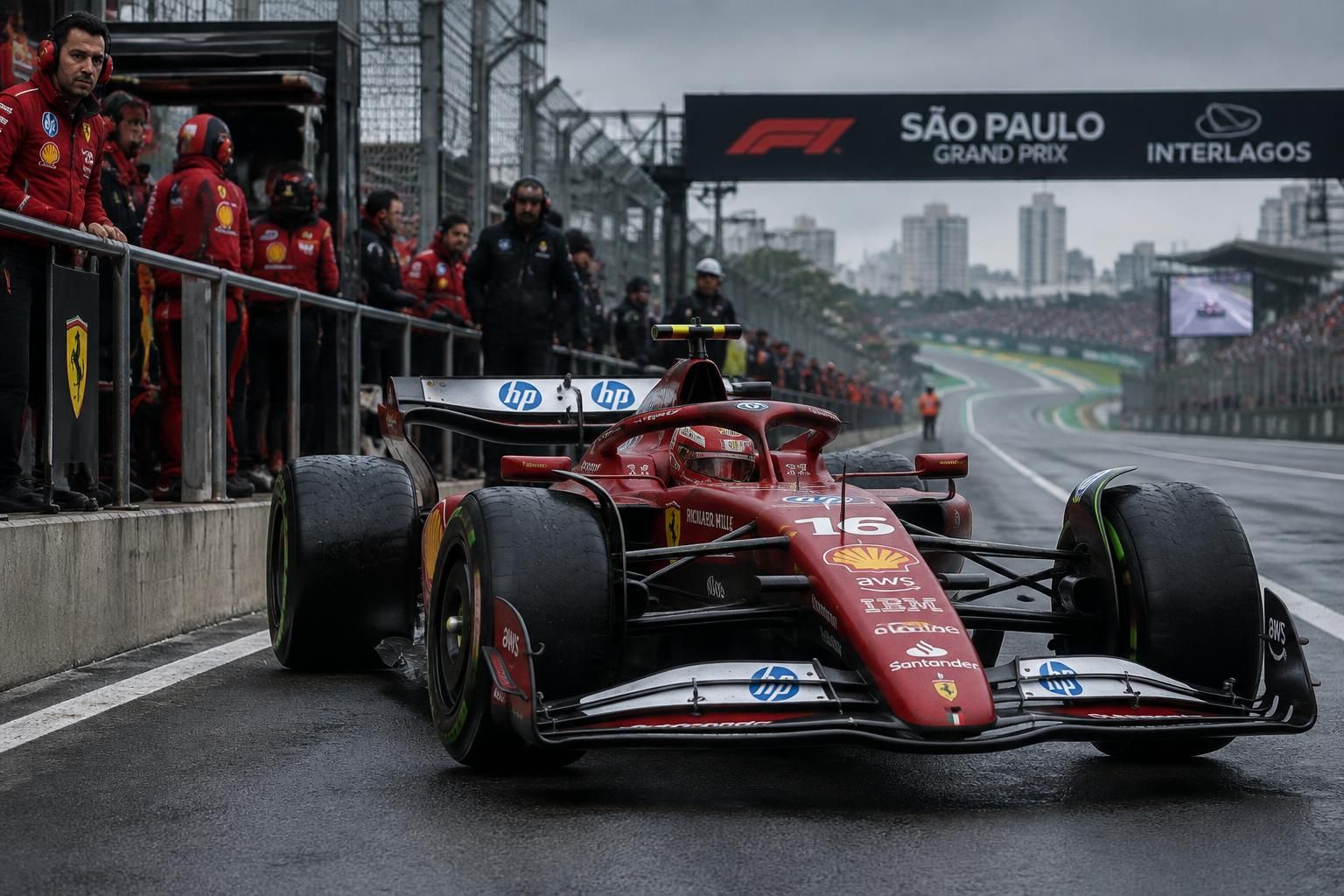
More engine power could have let Ferrari use more downforce. That setup would better suit the mixed demands of the middle sector. Instead, low wing angles and higher ride heights cut grip in wet conditions. The result was a painful compromise for Ferrari, not a single isolated fault.
Hamilton’s choices on track did not erase the car’s wider weakness. Ferrari’s team decisions had to balance engine drag and tyre life across changing conditions. That trade-off matters beyond one race, because rivals can exploit a broader setup window. The championship impact reaches beyond one weekend if Ferrari cannot unlock its package.


