
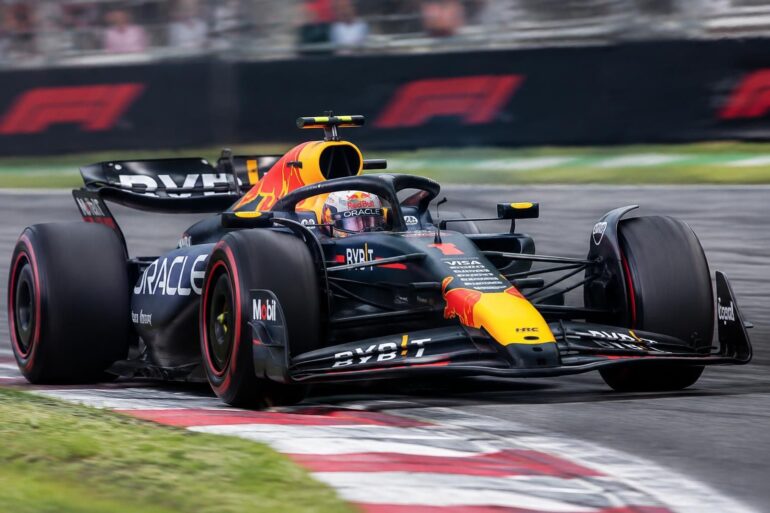

You saw Max Verstappen turn a grid setback into a remarkable charge at Interlagos. Red Bull says no simulator could have predicted his rise from P21 to second. The result puts his driving skill and race performance at the center of the story.
After an unexpected power-unit problem forced a grid penalty, Verstappen carved through the field in São Paulo. His pace in real-world conditions challenged predictions that overtaking would prove harder than in past seasons. Red Bull team principal Laurent Mekies praised the feat, while Verstappen’s message to his rivals offers another measure of his competitive edge.
Verstappen’s Interlagos charge defied the forecast
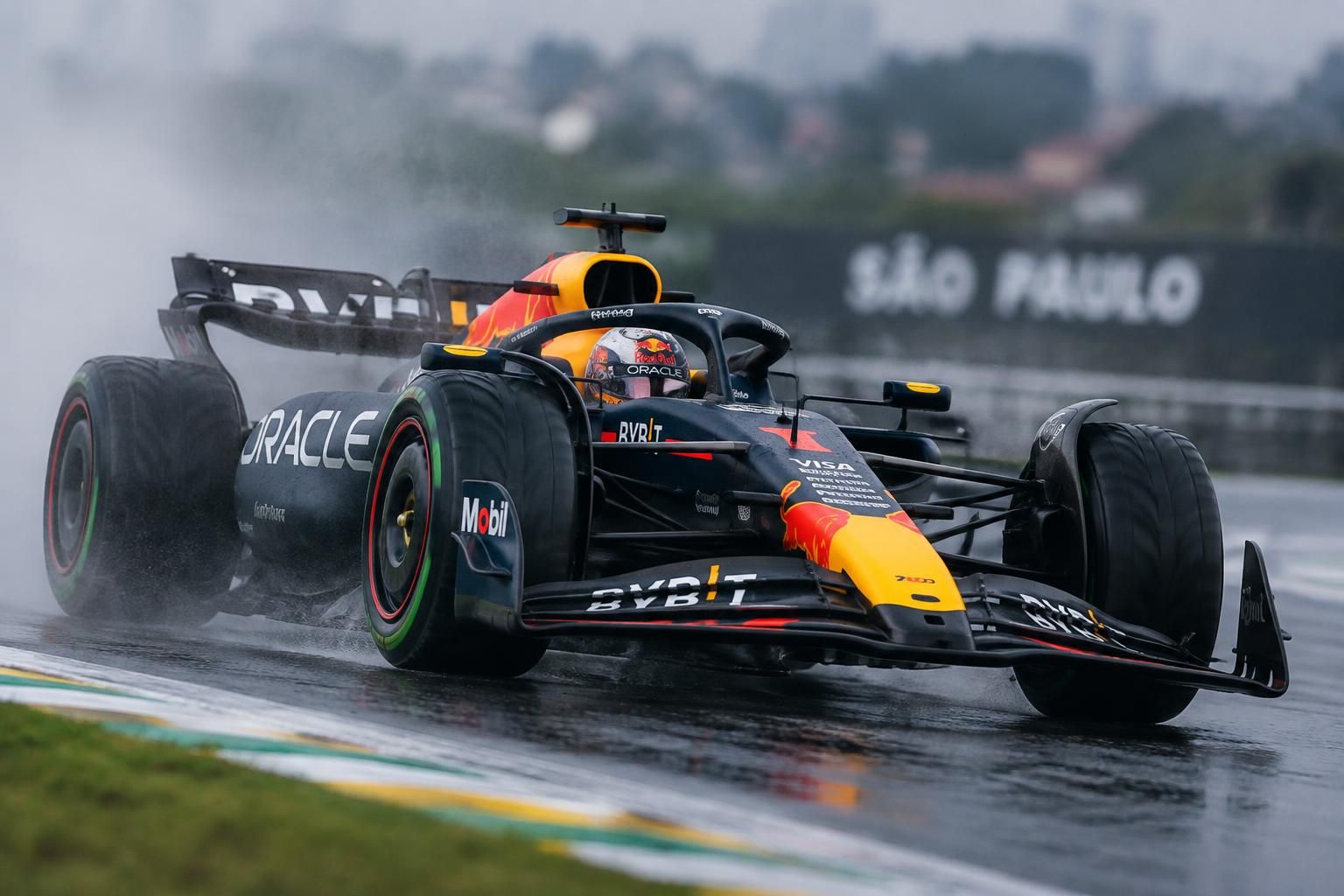
Verstappen went from P21 to second after the power-unit issue led to a grid penalty. The scale of that recovery stood out even in a race known for rapid shifts. Mekies said no simulator could predict such a result. The Red Bull boss said Verstappen beats the simulator on a regular basis.
Before the race, forecasts pointed to fewer passing chances at Interlagos. Verstappen’s progress contradicted that expectation in changeable conditions. His precise race craft helped him gain 14 places in five laps. Read more about Verstappen’s communication with Red Bull during race weekends.
The result shows how F1 racing can diverge from a simulator’s projections. Red Bull Racing pointed to Verstappen’s driving skill, not a model, as the decisive factor. Track conditions shaped the contest as the Dutch driver moved through the field. The simulator could not capture that exact race.
A pattern of strong Verstappen drives in Brazil
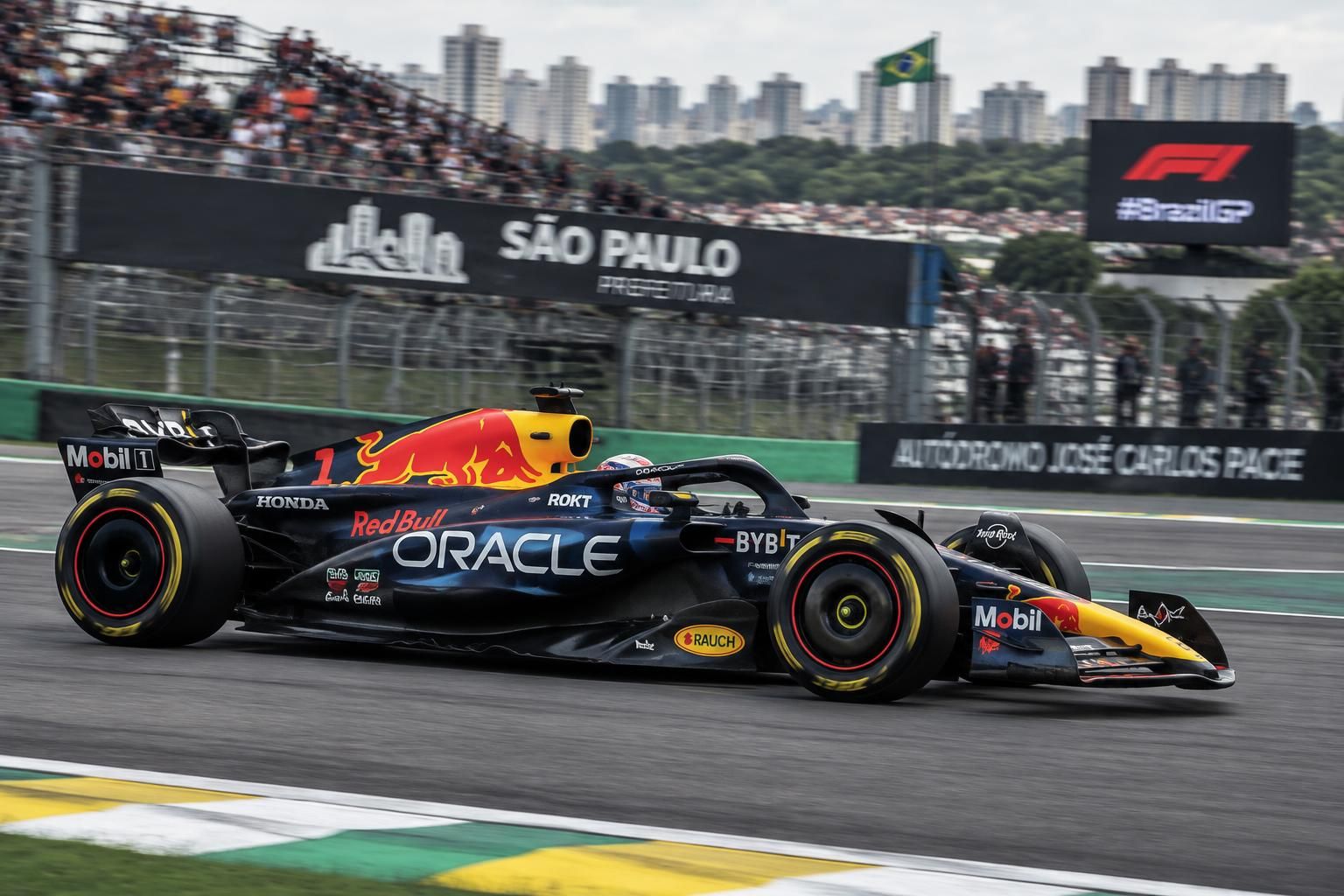
This was the third straight year Verstappen made a notable mark at Interlagos. He won from P17 in 2024, then reached the podium from the pit lane a year later. Each Brazil result carried its own challenge and demanded a recovery drive. The latest run began from P21.
Those earlier performances give the São Paulo result a clear reference point. The latest climb followed a power-unit problem, not a routine start near the front. Verstappen’s record at the circuit has included both a win and a podium from difficult positions. Interlagos has tested his adaptability across three seasons.
Fans can compare this drive with his earlier Brazil results in coverage of Verstappen’s dominance. Each race offered a different starting point and a distinct route through the field. The latest performance again put his race craft under the spotlight. That repeated strength gives the result context beyond a single afternoon.
Red Bull explains the power-unit penalty
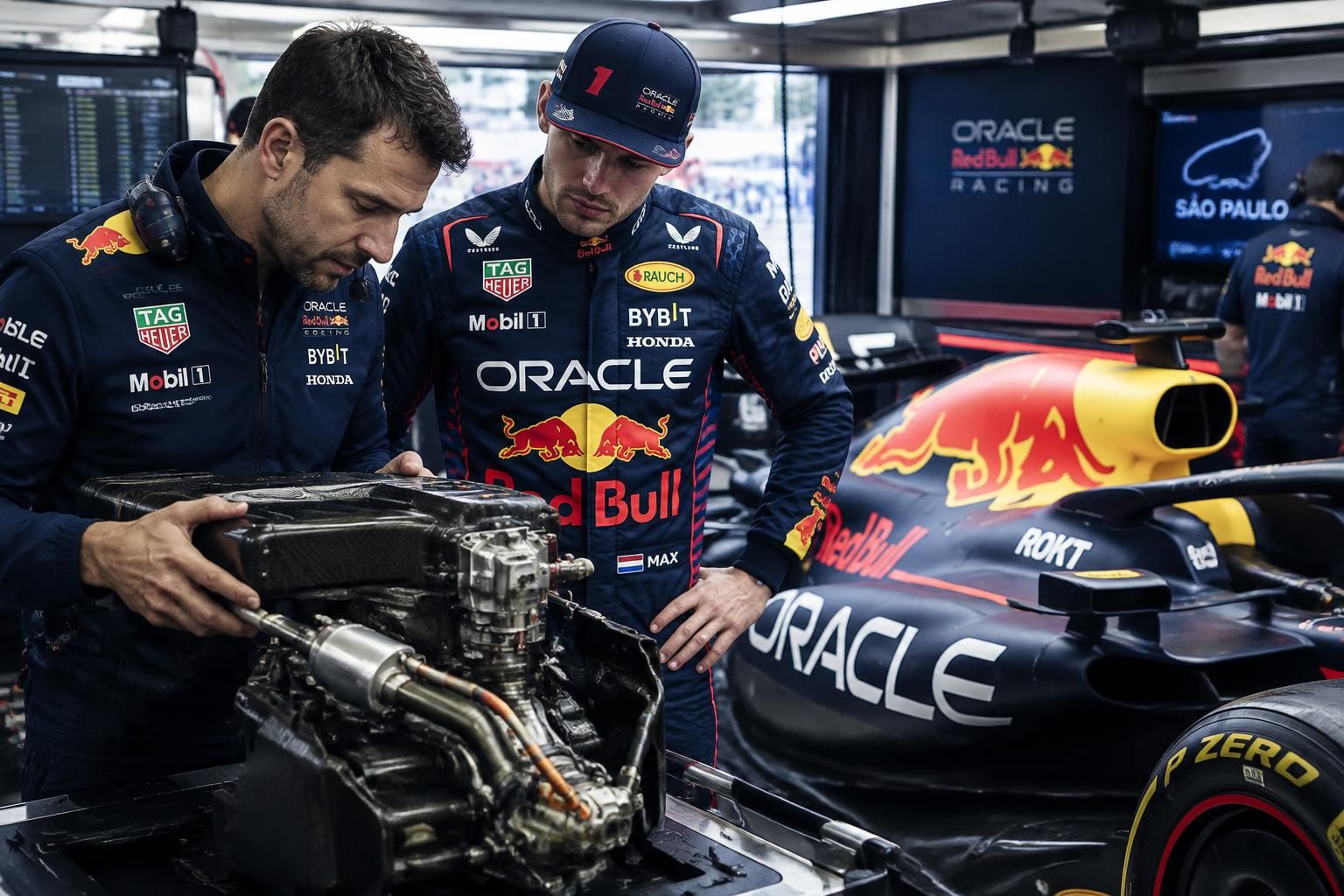
Mekies acknowledged that the grid penalty frustrated the team. Verstappen had shown good pace on Friday and Saturday morning, and in parts of qualifying. The penalty was not planned and followed a small issue on Friday. Mekies said the team had to accept the setback.
The Red Bull boss also praised the first year of the power-unit partnership between Red Bull Powertrains and Ford. He described the work as extraordinary, despite the problem that affected Verstappen’s weekend. That wider project shaped the team’s response to the penalty. Mekies stressed that such issues form part of the sport.


