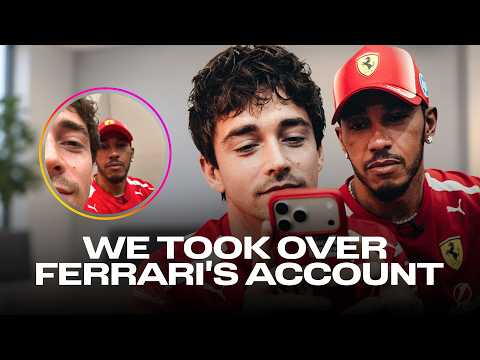
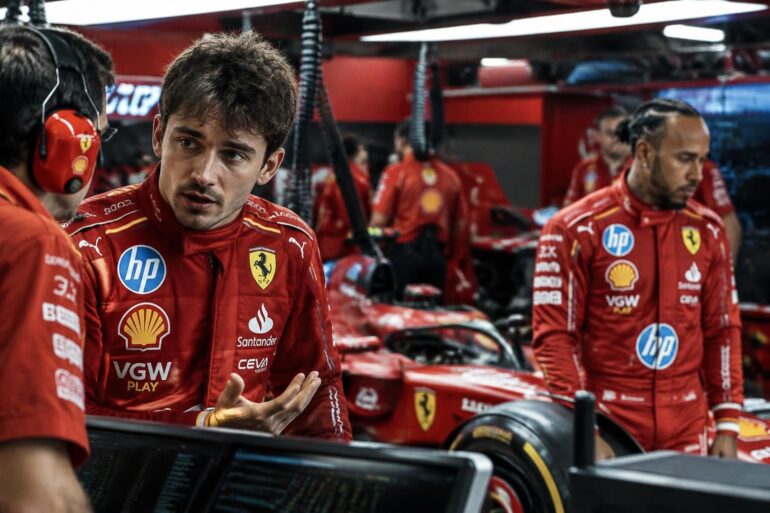

You saw Charles Leclerc take the lead, then face a penalty after his first-lap clash with Lewis Hamilton. His account explains why Ferrari’s call became a flashpoint in Mexico City. The dispute left both drivers with questions before the race was done.
At the Autódromo Hermanos Rodríguez, one missed corner reshaped Ferrari’s race and drew attention to its calls. The unclear return call left fans weighing Leclerc’s account against Hamilton’s radio complaints. Here is the Mexico City race sequence, from Turn 4 to the pit stop that changed the lead.
Leclerc and Hamilton clash on lap one
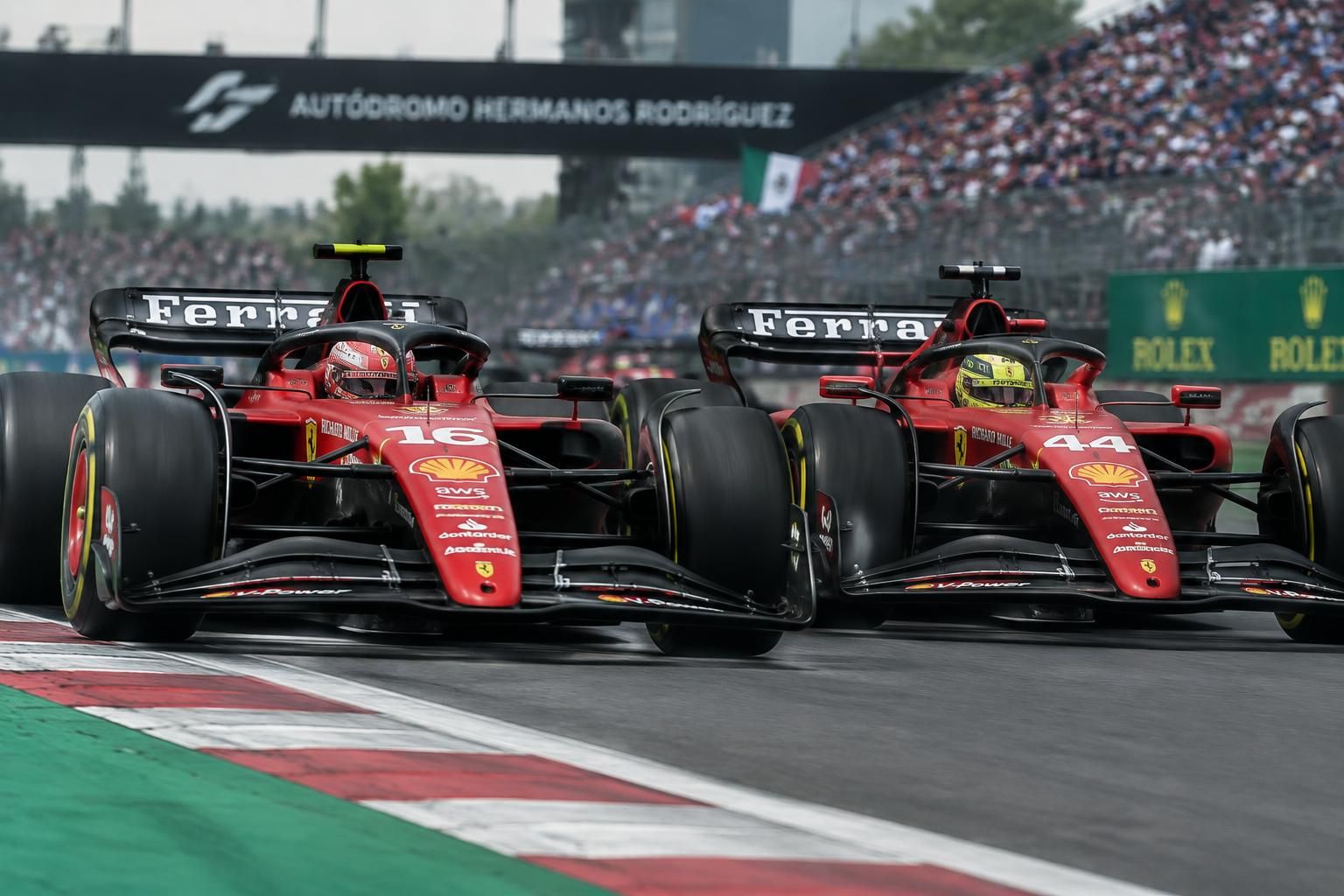
Charles Leclerc came through the first three turns behind Lewis Hamilton during the Mexico City Grand Prix. At Turn 4, he swept around the outside of his Ferrari teammate. Both drivers missed the corner, and Leclerc cut across the grass. That first lap fight for position placed him ahead, with an advantage the stewards later reviewed.
Leclerc said the gap at Turns 1 and 2 persuaded him to attack. He added that both drivers braked late at Turns 4 and 5. Neither car made the corner, which left the move open to scrutiny. The close Ferrari duel set the tone for a race shaped by split-second calls. Read the Turn 4 account for the details.
Ferrari’s team orders leave both drivers confused
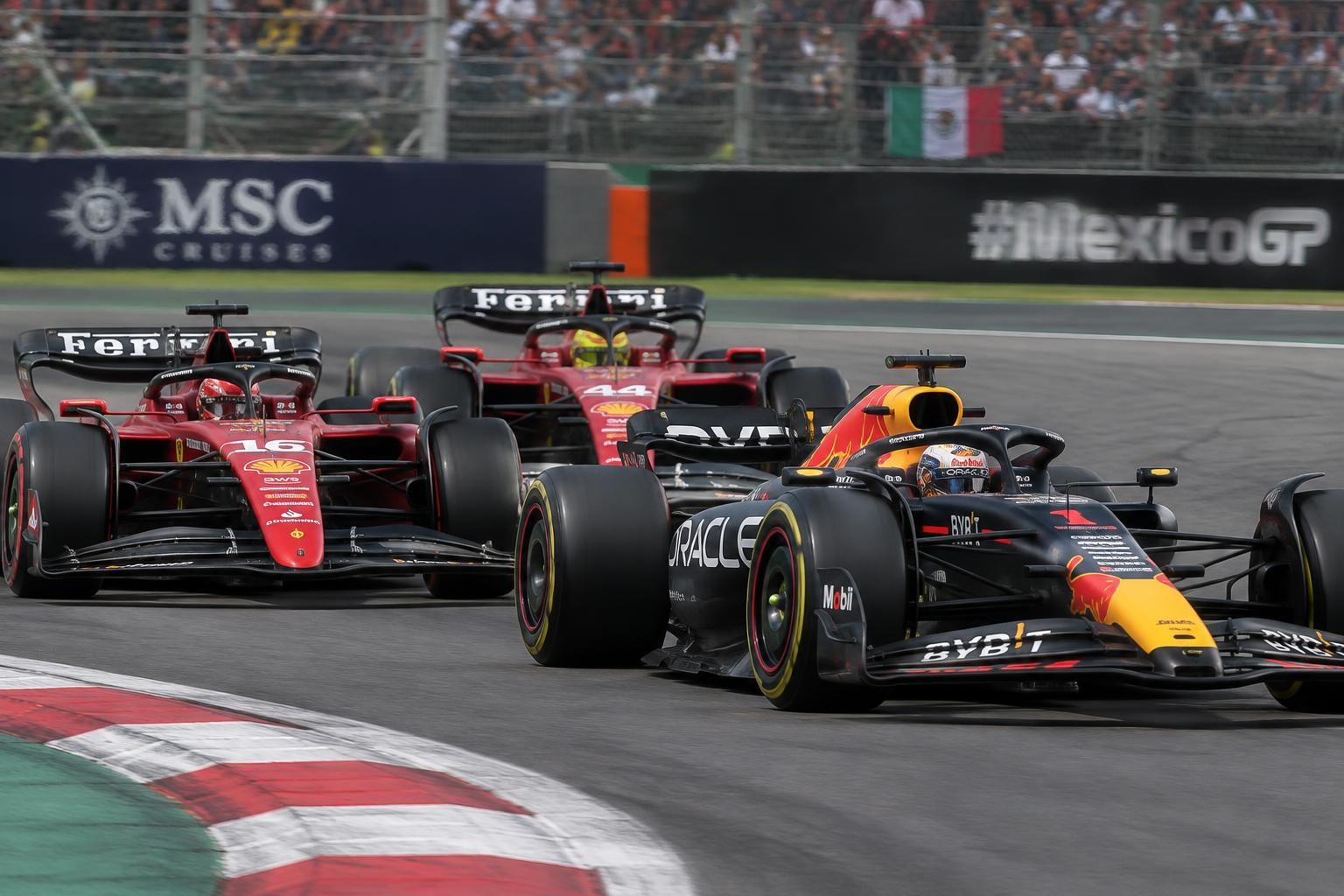
Leclerc said he planned to hand the place back to Hamilton after the clash. Hamilton then lost momentum as Max Verstappen moved down the inside at Turn 6. The pass changed the race strategy for Ferrari’s two drivers. That new track position complicated Ferrari’s call before the team could resolve the question.
Leclerc said he asked his team by radio whether he should yield. He kept his place as Verstappen’s move changed the situation. Hamilton later told race engineer Carlo Santi that the drivers’ briefing had covered a place return. The team orders question stayed open as the race unfolded. See the radio exchange for the dispute’s key detail.

A five-second penalty reshapes Ferrari’s race
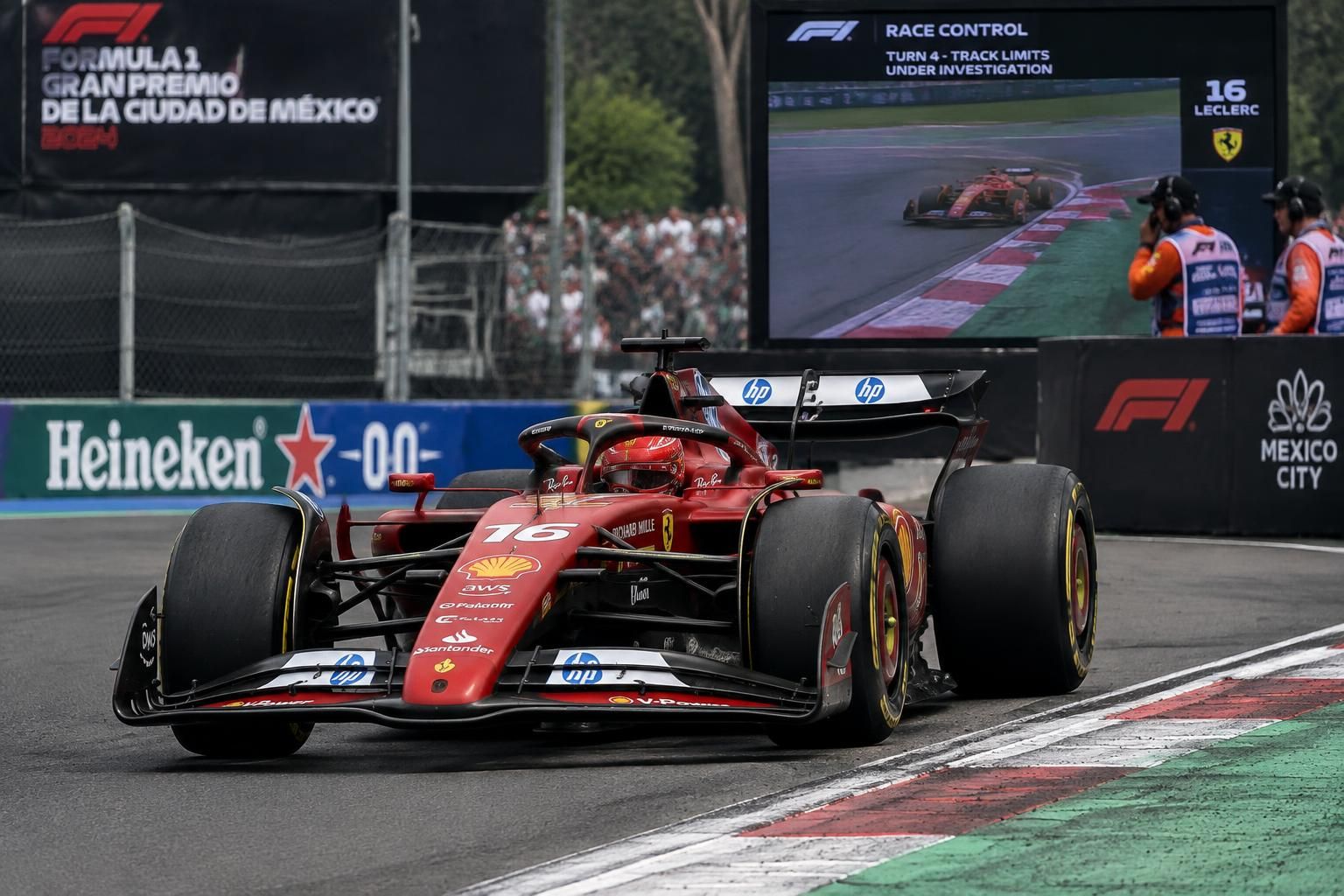
The stewards gave Leclerc a mitigated five-second penalty for the advantage from the cut. He built a gap of around five seconds before his first pit stop. That margin did not keep Verstappen behind after the stops. The five-second penalty shaped Ferrari’s options as the Red Bull driver took the net lead in the pit lane.
Leclerc’s account links the sanction to the opening move, not a later error. Yet the pit stop sequence determined where each driver emerged. Verstappen gained the lead while Ferrari’s race strategy came under scrutiny. Read the pit stop account to trace that change. The lead changed in the pit lane, not through another pass on track.
Hamilton’s reaction fuels backlash after Mexico City
Hamilton voiced his anger to race engineer Carlo Santi as the race moved on. He warned that the situation would become a “big problem.” Leclerc later acknowledged how frustrating those early laps must have felt for his teammate. His post-race account recognized Hamilton’s frustration without disputing the disputed call. More on the Ferrari reaction puts the exchange in context.
Hamilton finished second behind Verstappen after a red flag linked to Valtteri Bottas’s incident. Leclerc came home fourth. The result sharpened attention on Ferrari, while backlash against Lewis Hamilton focused on his response. Leclerc said the pair would discuss what happened. The radio dispute outlasted the first lap as a central story from Mexico City.
Why Ferrari’s strategy misfire drew scrutiny
The dispute involved more than a place between teammates. Leclerc had intended to return the lead, but Verstappen’s pass altered his calculation. He asked Ferrari for guidance and kept position. That split-second choice changed the race before the first pit stop. For Scuderia Ferrari, the episode exposed how quickly a race strategy can become unclear.
Formula One teams must make calls while drivers face changing track positions. In Mexico City, the gap between a planned hand-back and an actual one narrowed fast. Leclerc’s explanation supplied the sequence behind the backlash. Hamilton’s radio comments showed the cost of unclear team orders. The Ferrari strategy misfire left lasting questions about how the team handled both cars.