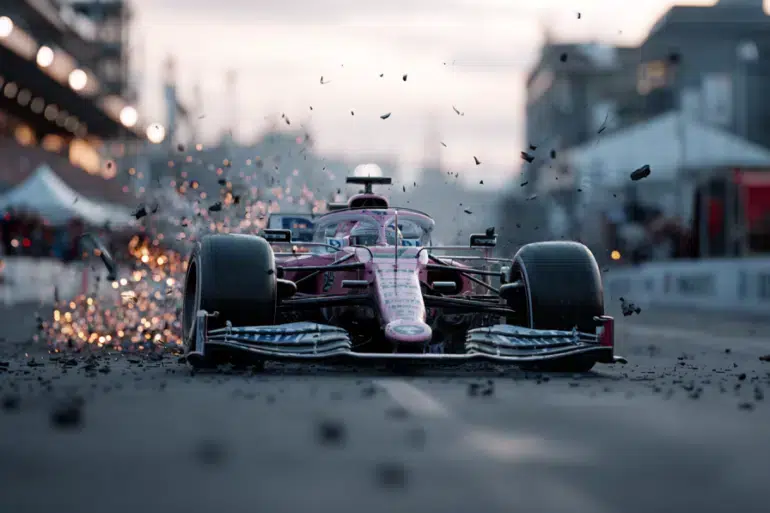
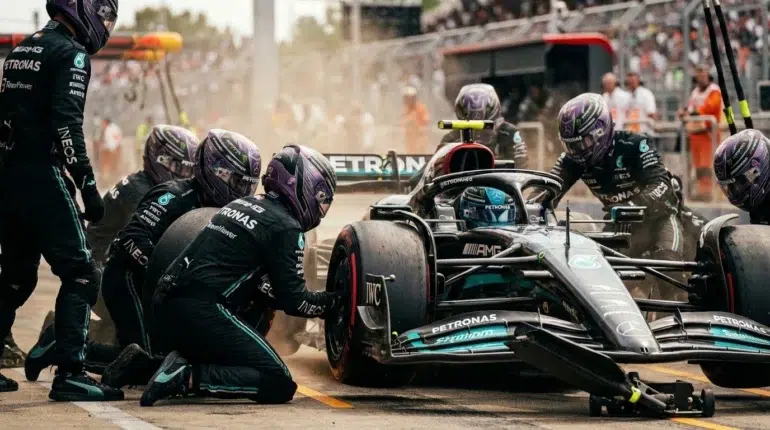

Pit stops in F1 are much more than simple technical breaks. They represent moments where every fraction of a second counts.
Behind this apparent speed lies a precisely choreographed operation orchestrated by highly specialized mechanic teams. Today, let’s look back at the fastest pit stop records in F1. We will also explore the techniques that help push the limits of performance.
A brief history of pit stops in F1
Early pit stops were much slower and rudimentary. During the first Formula 1 races, mechanics took several minutes to refuel the car. This also included changing tires and performing minor repairs.

Technologies have evolved since then, as has the importance of pit stops in race strategy. Teams then began investing in more sophisticated tools and training specialized mechanics. The introduction of pneumatic guns as well as automated systems gradually reduced pit stop times in F1.
The evolution toward modern performance
By the early 2000s, teams were analyzing every detail of pit stops to optimize speed and safety. They also used simulations to anticipate movements and test new methods. This scientific and technical approach led to records of incredible precision. Pit stops became a true sport of coordination and efficiency.
The fastest pit stop records in F1
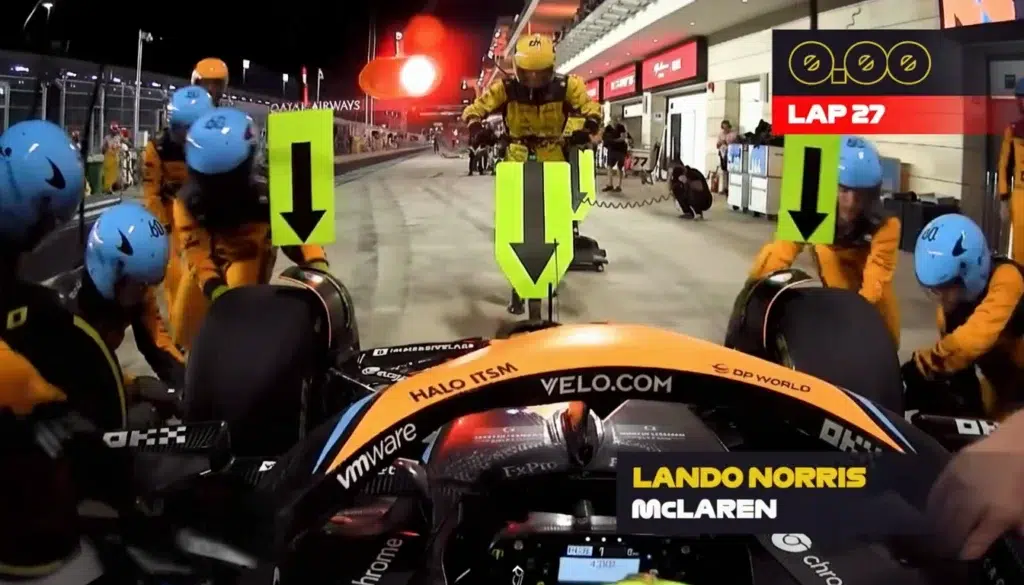
Recent F1 history is full of impressive performances. Red Bull Racing has long been a pioneer by achieving stops under two seconds. McLaren made a mark with a record time of 1.80 seconds at the 2023 Qatar Grand Prix. Red Bull also recorded 1.82 seconds in 2019, and Ferrari 1.94 seconds in 2024.
Challenges linked to pit stop records in F1
Reducing a pit stop to under two seconds requires perfect coordination and exceptional technical mastery. Every second gained also carries risks. Even a minor mistake can be costly in a race. Mechanics must combine speed and precision while managing the intense pressure of competition.
Modern techniques for lightning-fast stops
Current teams rely on advanced technologies and intensive training. These criteria are essential in F1 for fast and efficient pit stops. Every mechanic has a specific role, from removing the wheels to checking mechanical components.
They also use custom tools designed to save time. Regular simulations help rehearse movements and improve synchronization. All this ensures that every pit stop is as smooth as possible.
Coordination and specialization, two essential traits
The success of a pit stop in F1 depends on the specialization of each team member. Some mechanics focus on the front tires while others focus on the rear or mechanical support. Thanks to this division of labor, F1 teams can achieve incredible performance.

How important are they, strategically speaking ?
A fast pit stop can change the course of a race. Teams must choose the ideal moment and adapt to unforeseen events like weather or on-track incidents. Each movement must be executed perfectly. All these factors influence the driver’s final position. A poorly executed stop can cost valuable positions, while a record-breaking stop can provide a decisive strategic advantage.
How will pit stops evolve in F1?
With technological advancements and continuous team investment, pit stops could become even faster and more precise. Innovations in tools and partial automation will likely lead to new records. Similarly, ultra-specialized training will continue to push the limits of performance in Formula 1.