
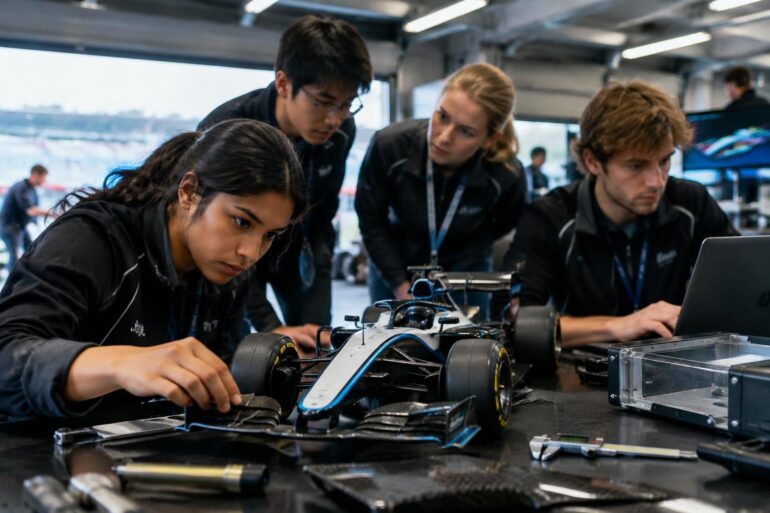

Look beyond the miniature cars, and you will find a serious test of future Formula 1 talent. At Singapore’s 2026 final, six Saudi students turned precision and teamwork into a world title. For young hopefuls, the route from school projects to an F1 garage can start here.
STEM Racing puts young talent under pressure, with students designing, building, and presenting miniature cars. Its latest world final showed how an annual global engineering competition can introduce next-generation engineers to motorsport engineering. The experience also gives students a practical route into university study and Formula 1 careers.
How STEM Racing puts young engineers to the test
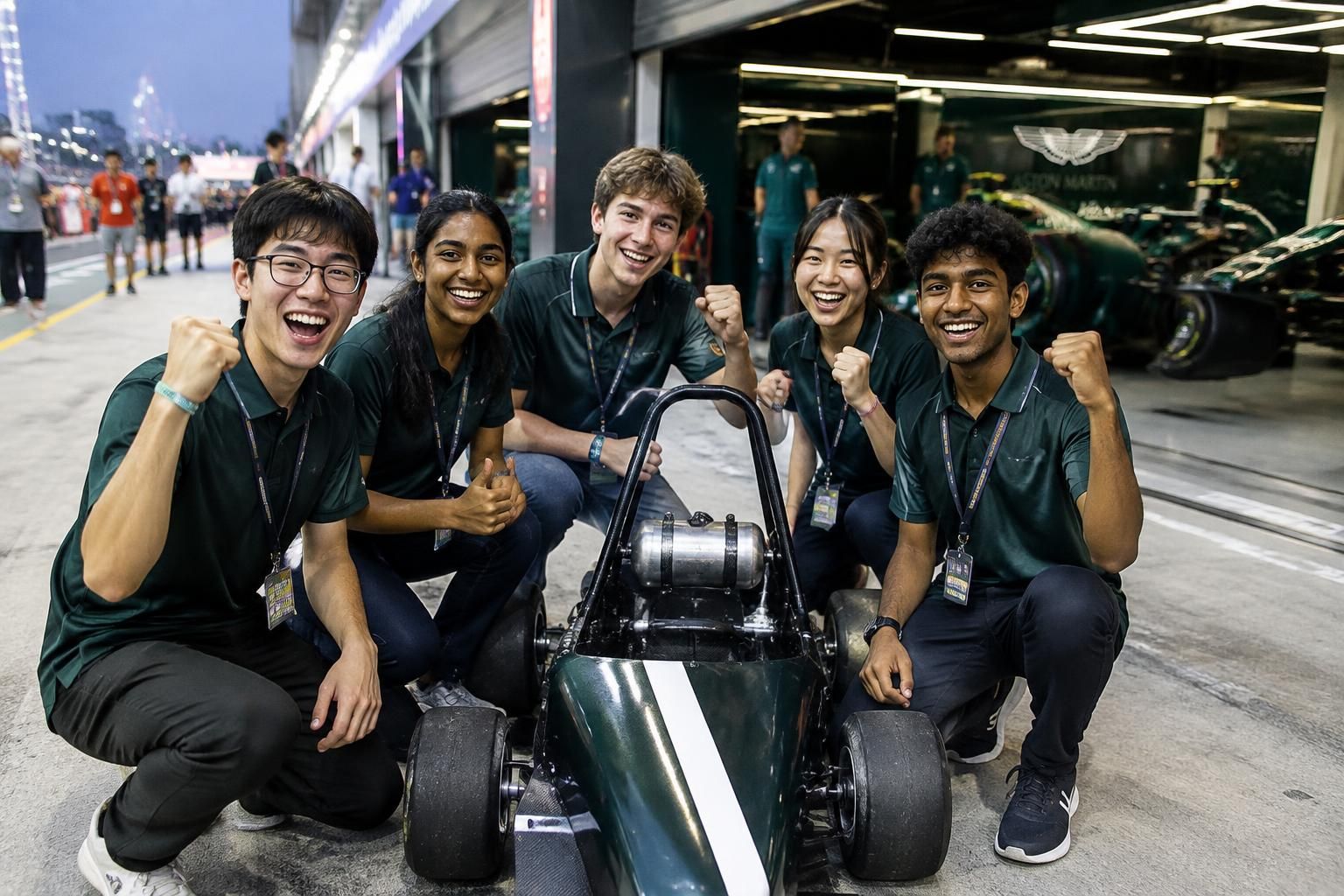
At Singapore’s 2026 final, six Saudi high-school students from Team Lynx claimed the world title. They received their trophy on the Grand Prix podium. An Aston Martin garage tour brought the young winners closer to Formula 1. Their school project had reached the global stage, where fresh ideas meet exacting standards. The final crowned Lynx after a four-day contest.
Teams build miniature cars propelled by CO2 cartridges, then race them along a 20-metre track. Some reach speeds of up to 70 kilometres per hour. Students use CAD for serious race car design before CNC tools shape each body. Printed wings and strict checks test the cars against detailed rules, much like technical work in Formula 1.
The Singapore final brought together 91 student teams from 36 countries. Judges assessed each team’s brand, sponsor plan, display booth, and spoken pitch. With no more than six students per group, everyone must take clear responsibility. This mix of technical skills and teamwork mirrors lessons from Formula 1 team environments.
From school competition to Formula 1 careers
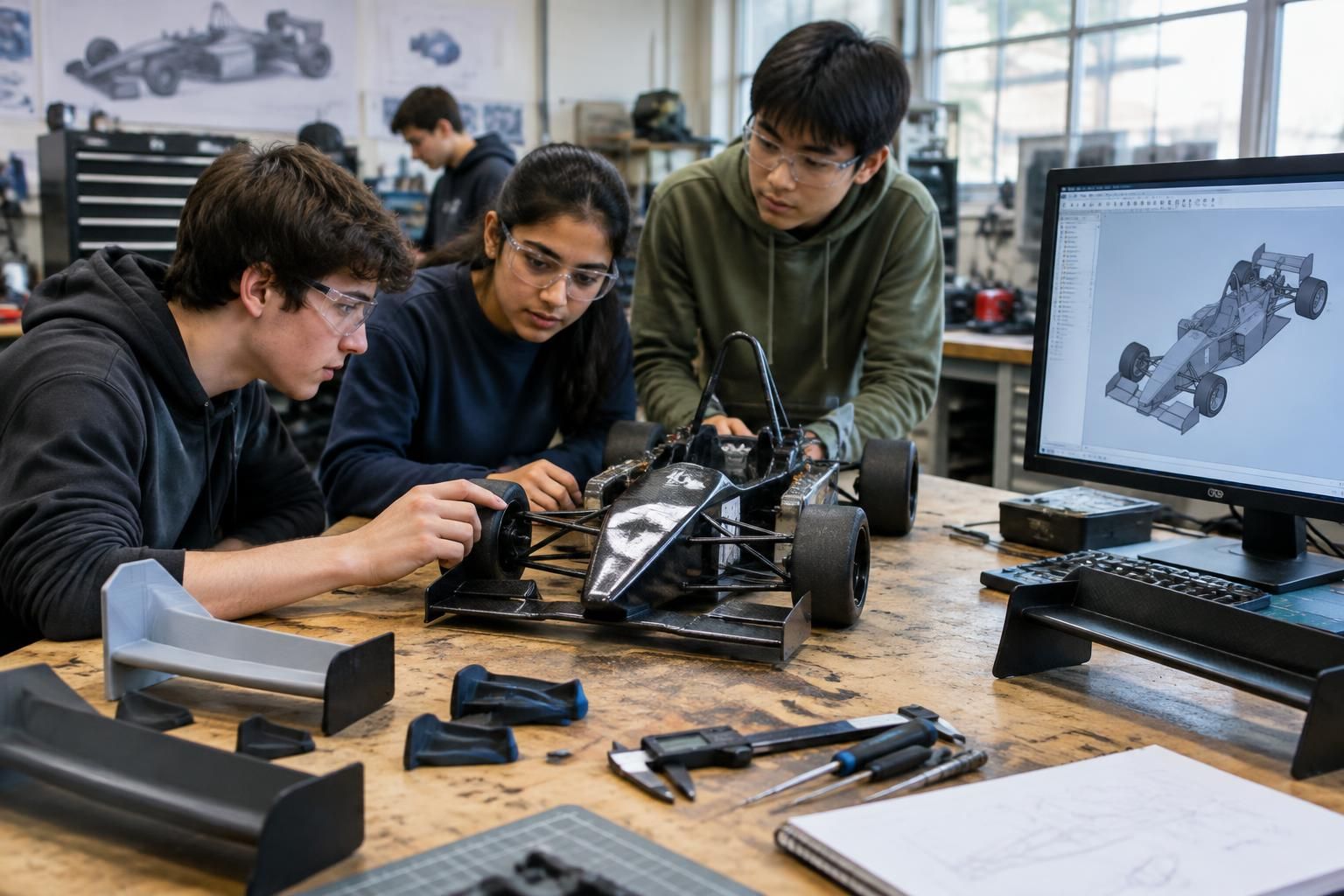
Past finalists show how the contest can support real Formula 1 pathways. Kyriakos Theofanidis won in 2016 and now works as a mechanical engineer at Red Bull Ford Powertrains. James Mitchell joined Aston Martin after competing at the 2023 world final. Laurence Vines works as a structural design engineer at Williams.
Vines has said the contest introduced him to CAD, CFD, and FEA before university. He later studied mechanical engineering at University College London on a full scholarship. A placement at Williams then brought his studies closer to professional motorsport. His experience shows how early technical practice builds confidence and can support wider STEM education.
Amy Martin also found a path through the programme, despite little initial interest in F1. Her all-girl school team won a commercial award, and she entered the Williams Engineering Academy in 2016. A paddock visit helped her picture a future in the sport. She later joined Mercedes High Performance Powertrains as a financial controller, showing career development can take many routes.
Why F1 teams value STEM education
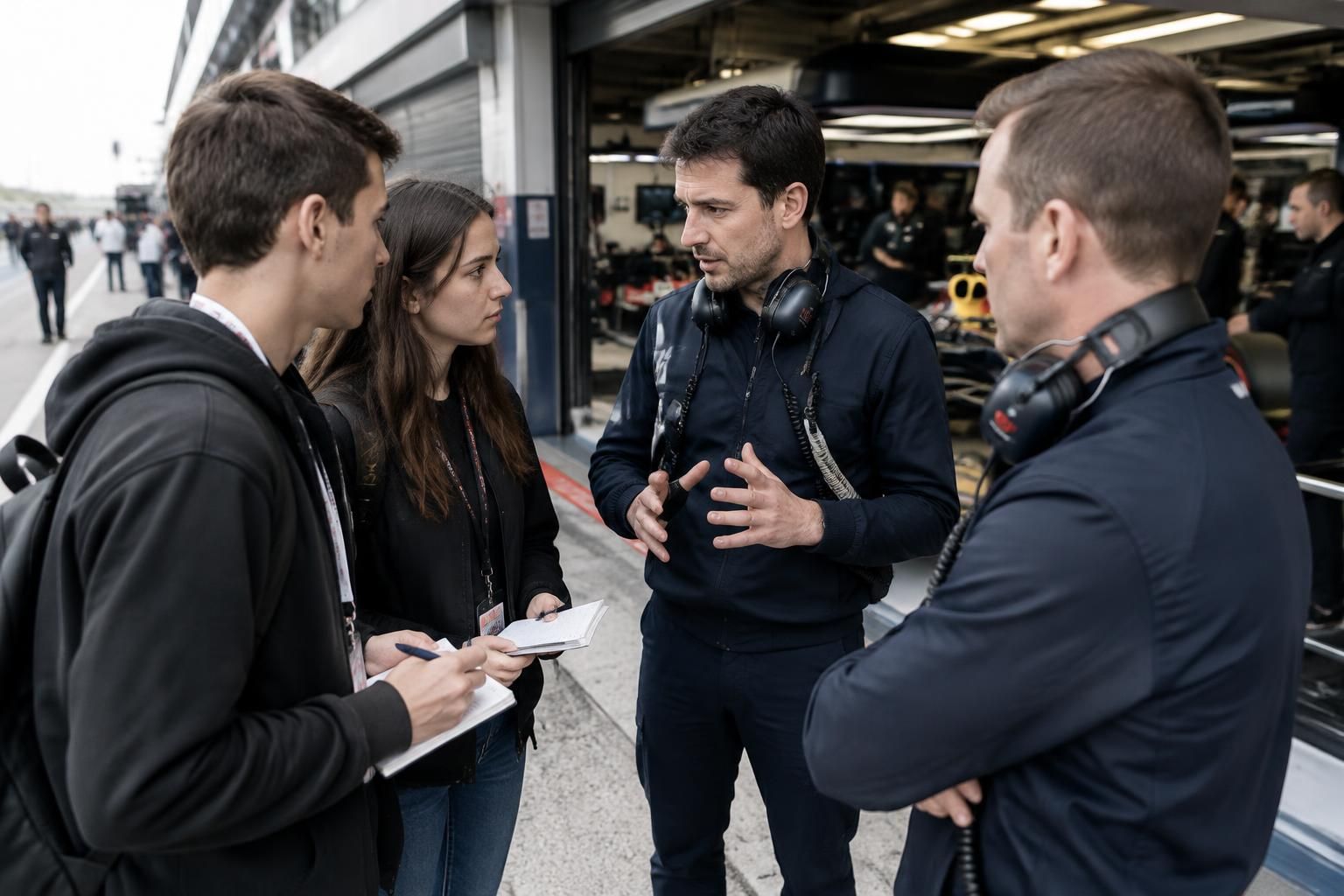
Formula 1 teams need new talent across design, research, commercial work, and strategy. McLaren racing director Randy Singh has described graduate schemes as a route into team roles. He also values competitions that help students understand how different departments work together. These programmes can foster innovation through shared experience and prepare next-generation engineers for fast-paced environments.
Singh has pointed to STEM Racing, Formula Student, and rocketry as useful team experiences. Each asks students to solve practical problems with other people. That lesson matters in motorsport engineering, where sound ideas must work under pressure. For aspiring engineers, the contest turns school skills into practical experience and brings the F1 workplace into view.
STEM Racing began in 2000 as F1 in Schools and now reaches students through programmes for younger pupils. Founder Andrew Denford has described a network that spans 77 countries. The competition helps students explore roles from aerodynamics to project management. Its lasting value lies in helping each student find a role that fits.
The path from a school-built car to an F1 team is not automatic. Yet finalists gain practice in design, communication, and collaboration before university. Those skills can support careers across racing, aerospace, and other fields. In Singapore, Lynx Racing showed how ambition can start with a small car.


